AI & Automation
AI Assistants for Business Teams: Practical Use Cases That Save Time
Summaries, drafts and tagging: where AI assistants genuinely save time for sales, support and finance teams, and where a human still needs to check the work.

Xevort Team
Zoho & technology experts

AI assistants for business have moved from novelty to everyday tools. They now sit inside the CRM, help desk, email and document apps many teams already use. The useful question now is where they reliably save time and where they create risk. This guide covers what AI assistants do well and badly, practical use cases by team, the AI already built into tools like Zoho, a rollout plan, governance basics and how to measure value.
It's written for managers and business owners who want results their team will actually use, without exposing customer data or handing important decisions to a model.
Quick Answer
How can AI assistants for business save time?
AI assistants save the most time on narrow, repetitive language tasks: summarizing long email threads or tickets, drafting first replies, extracting details from messages, tagging incoming requests and suggesting next steps. They work best inside tools your team already uses, such as Zia in Zoho CRM and Zoho Desk, with a person reviewing anything that affects customers, pricing or compliance.
Key Takeaways
- AI assistants excel at summarizing, drafting and classifying text; they are weak at facts, math and judgment.
- Use the AI already built into your CRM, help desk and office suite before buying a separate tool.
- Keep a human check on anything customer-facing, financial or legally sensitive.
- Set data rules and measure time saved per task before expanding to more workflows.
What AI Assistants Are Good and Bad At
Today's AI assistants are built on large language models. They predict useful text based on patterns and on the context you give them, such as an email thread or a CRM record. That makes them strong at some tasks and unreliable at others.
Where they help:
- Summarizing long threads, tickets, meeting notes and records.
- Drafting first versions of emails, replies and internal updates.
- Rephrasing text for tone, length or another language.
- Classifying requests by intent, topic or sentiment.
- Extracting details such as names, dates and order numbers from messages.
Where they struggle:
- Stating facts they weren't given; they can produce confident but wrong answers.
- Precise calculations, pricing and anything requiring exact numbers.
- Decisions that need business context, empathy or accountability.
- Knowing what's current unless the tool is connected to your live data.
AI Assistant Use Cases by Team
The best use cases are narrow and repetitive, with output a person can check in seconds. Here's where AI assistants tend to earn their place, and the human check each one needs.
- Sales
- AI taskSummarize a deal's emails and draft the next follow-upHuman checkRep edits tone, commitments and pricing before sending
- Customer support
- AI taskSummarize tickets and draft replies from help articlesHuman checkAgent verifies the answer fits the customer's case
- Marketing
- AI taskDraft social posts, email variants and outlinesHuman checkEditor checks claims, brand voice and facts
- Finance
- AI taskExtract invoice details and draft payment remindersHuman checkAccountant confirms amounts, dates and tax details
- HR
- AI taskDraft job descriptions and summarize policy questionsHuman checkHR reviews for fairness, accuracy and local law
- Operations
- AI taskTurn meeting notes into action items and ownersHuman checkManager confirms owners and deadlines
| Team | AI task | Human check |
|---|---|---|
| Sales | Summarize a deal's emails and draft the next follow-up | Rep edits tone, commitments and pricing before sending |
| Customer support | Summarize tickets and draft replies from help articles | Agent verifies the answer fits the customer's case |
| Marketing | Draft social posts, email variants and outlines | Editor checks claims, brand voice and facts |
| Finance | Extract invoice details and draft payment reminders | Accountant confirms amounts, dates and tax details |
| HR | Draft job descriptions and summarize policy questions | HR reviews for fairness, accuracy and local law |
| Operations | Turn meeting notes into action items and owners | Manager confirms owners and deadlines |
Many of these pair well with classic rule-based automation. AI drafts or classifies, and a workflow routes the result. Our list of automation wins for growing teams covers the rule-based side.
AI Inside the Tools You Already Use
Before buying a standalone AI tool, check what your existing software already includes. Built-in assistants work on data that is already in the system and follow its existing user permissions, which makes rollout simpler. Features and availability depend on your edition, plan and data center, so confirm on the vendor's site.
Zia in Zoho CRM
Zia, Zoho's AI assistant, can summarize individual emails and whole threads on a record, detect the intent of an email such as a request, query or complaint, and help draft content in notes and emails. Admins can also use Zia's prediction builder for outcomes like whether a deal is likely to close. If you're evaluating the platform, see why businesses move to Zoho CRM.
Zia in Zoho Desk
In Zoho Desk, Zia can summarize ticket conversations, analyze sentiment as positive, neutral or negative, and draft replies based on your knowledge base articles. Reply drafts are only as good as those articles, so keep them current. Our Zoho Desk setup guide covers the foundations.
AI in Workflows: Zoho Flow and Deluge
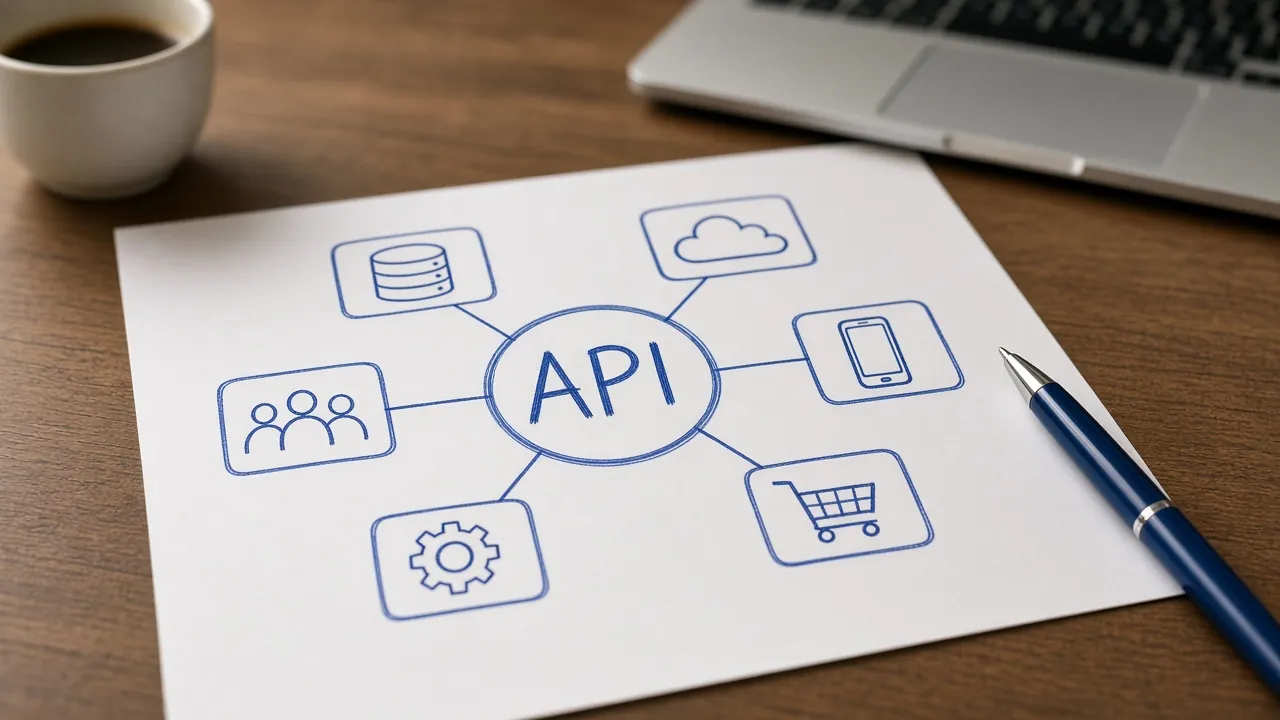
Zoho Flow includes AI steps that can summarize, rephrase or extract content inside an automated workflow, for example pulling key details from an inbound email before creating a record. When you need AI connected to other systems, plan the data flow carefully. Our API integrations guide explains how.
Microsoft 365 Copilot and Gemini in Google Workspace
If your team works in Microsoft 365 or Google Workspace, both suites offer AI assistants for email, documents and meetings. Microsoft documents that Copilot only surfaces organizational data a user already has permission to view, and Google states that Workspace data isn't used to train its generative AI models outside your organization without permission for qualifying editions.
A Practical Rollout Plan for AI Assistants
- Pick two narrow use cases
- Set data and review rules
- Pilot with a small team
- Measure time and quality
- Train and expand
- Review quarterly
Start with tasks where a wrong answer is cheap and easy to spot, such as internal summaries. Write down what data the assistant may use and which outputs need review. Run a four-to-six-week pilot with a few willing users, compare results against a baseline, then roll out with short training on prompts and review habits.
Data Privacy and Governance for Business AI
Good AI governance doesn't need to be heavy. The NIST AI Risk Management Framework, a voluntary framework from the US National Institute of Standards and Technology, organizes the work into four functions: Govern, Map, Measure and Manage. NIST has also published a companion profile focused on generative AI. For a growing business, that translates into a short list:
- An approved tools list: which AI assistants staff may use, and with what data.
- Clean permissions: built-in assistants respect access rights, so overshared folders and records become an AI problem.
- Human review rules: what must be checked before it reaches a customer.
- A named owner: someone who reviews incidents, vendor terms and new use cases.
Measuring the Value of AI Assistants
Measure per task, not per tool. Time a sample of tasks before the pilot, such as minutes to read and summarize a ticket or draft a follow-up, then repeat with AI assistance, including the time spent reviewing and correcting the output.
Track quality alongside speed: how often drafts are used with light edits, how often they're rewritten, and whether customer satisfaction or error rates change. If reviewing takes as long as doing the task manually, that use case isn't ready.
Common Mistakes When Adopting AI Assistants
- Starting too broad. Company-wide access with no defined use cases leads to scattered, unmeasured usage.
- Trusting output blindly. Sending AI drafts without review is how wrong facts reach customers.
- Ignoring messy data. Summaries of incomplete records are incomplete summaries.
- Skipping training. Short sessions on prompting and reviewing make a big difference.
- Automating judgment. Refunds, pricing and sensitive replies need a person.
Many of the same traps apply to rule-based automation; see workflow automation mistakes to avoid.
Frequently Asked Questions
What is an AI assistant for business?
An AI assistant for business is software, usually built on a large language model, that helps employees with language tasks such as summarizing documents, drafting emails, answering questions about company data and classifying requests. Many are built directly into CRMs, help desks and office suites rather than used as separate apps.
Is it safe to use AI assistants with customer data?
It can be, if you use business-grade tools with clear data terms, keep access permissions tidy and avoid personal AI accounts for work data. Review each vendor's privacy documentation, decide which data types are allowed, and require human review before AI output reaches customers.
What can Zia do in Zoho CRM?
Depending on your edition, Zia in Zoho CRM can summarize emails and records, detect email intent and sentiment, help draft notes and emails, suggest workflow automations and build predictions such as deal outcomes. Feature availability varies by edition and data center, so check Zoho's current documentation for your plan.
Will AI assistants replace employees?
For most businesses, AI assistants remove busywork rather than replace roles. They handle first drafts, summaries and sorting, while people make decisions, handle exceptions and own customer relationships. Teams that adopt AI well usually redirect saved time toward higher-value work like selling, solving problems and improving service.
How do we start using AI assistants in our team?
Pick two narrow, repetitive tasks where errors are easy to spot, such as summarizing tickets or drafting follow-ups. Use AI features already in your existing tools, set simple data and review rules, run a short pilot with a small group, and measure time saved before expanding.
Conclusion
AI assistants deliver real value when they're aimed at specific, repetitive tasks and backed by clear rules on data and review. Summaries, drafts and classification can give teams back meaningful time every week, especially when the AI already lives inside your CRM and help desk.
Start small, measure honestly and expand what works. If you'd like help choosing use cases or connecting AI to your business systems, explore our AI and automation services or talk to our team.
References

Written by
Xevort Team
Developers and Zoho consultants writing up practical lessons from client projects.
Want help applying this?
Tell us about your Zoho, product or cloud project and we'll suggest a sensible next step.